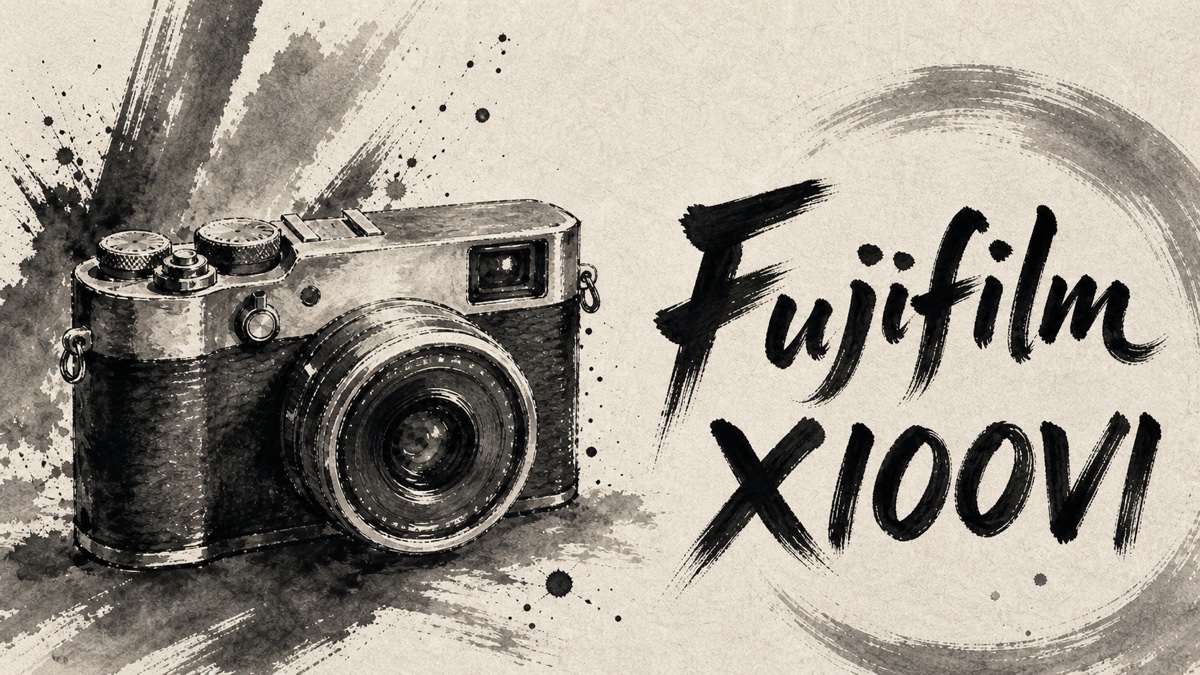
You may be considering the Fujifilm X100VI because you want a camera that feels more deliberate than a smartphone, more compact than a full interchangeable-lens kit, and more emotionally satisfying than a typical compact camera.
Japanese user feedback suggests that the X100VI is not being judged only by specifications. Many users talk about the look, feel, color, finder experience, and the simple pleasure of carrying one camera for everyday photography.
At the same time, the same feedback also makes the trade-offs clear. This is an expensive fixed-lens camera, availability can be frustrating, battery life and handling are not perfect, and it is not a pocket camera or a zoom camera.
Rather than a hands-on lab test, this article focuses on patterns in Japanese user feedback: where this model is praised, where it divides opinion, and what kind of buyer is most likely to enjoy it.
Amazon.com
Fujifilm X100VI
Check current availability on Amazon.com
As an Amazon Associate I earn from qualifying purchases.
What’s Fujifilm X100VI
Fujifilm X100VI is a premium fixed-lens compact camera built around a large APS-C sensor, a built-in 23mm F2 lens, Fujifilm’s film simulations, a hybrid viewfinder, physical dials, and in-body image stabilization.
Instead of treating it like a spec-sheet camera, many Japanese users seem to treat it as a camera for daily snapshots, travel, street photography, family scenes, and the pleasure of shooting with a tool that feels intentional.
The review themes revolve around design, still-image quality, Fujifilm color, the hybrid finder, and the fixed-lens shooting experience. The same fixed lens and compact body also create the main trade-offs: it is not a zoom camera, not a pocket camera, and not the most flexible camera for every situation.
Positive Reviews
The praise is strongest among users who want the X100VI experience specifically, not just any compact camera.
- Excellent design and ownership feel. The X100VI is often praised as a camera people enjoy looking at, holding, and carrying.
- Strong still-image quality. Users describe the camera as producing detailed, satisfying images for everyday photography.
- Fujifilm color is a major attraction. Film simulations, JPEG output, and color rendering are repeatedly treated as reasons to use the camera.
- The hybrid viewfinder adds enjoyment. Users value the optical/electronic finder experience as something different from a typical digital camera or smartphone.
- In-body stabilization matters. Some users see this as the improvement they had been waiting for in the X100 series.
- Good daily-carry fit for serious photography. It is not tiny, but it is easier to bring along than a larger camera kit.
- Physical controls support a more intentional shooting style. Dials and direct controls are part of the appeal for users who like the process of photography.
- The fixed lens can be liberating. For users who accept one focal length, the limitation can make shooting simpler and more focused.
- Crop modes add practical flexibility. Some users mention the higher resolution making 50mm- and 70mm-equivalent crop shooting more useful.
- Satisfaction is broadly high. The checked Japanese feedback was generally positive, especially around design, image quality, and shooting experience.
Negative Reviews
The concerns mostly come from price, availability, and the limits of a premium fixed-lens camera.
- Price is a major barrier. Even positive users often treat the X100VI as expensive.
- Availability can be frustrating. Japanese feedback includes complaints around stock, lottery sales, premium pricing, and difficulty buying at a normal pace.
- It is not a pocket camera. Users who expect a very small compact may find it larger and heavier than expected.
- There is no optical zoom. The fixed lens is central to the camera, but it will not suit buyers who want zoom flexibility.
- Battery life is a practical concern. Longer outings may require spare batteries or careful charging habits.
- Handling is not perfect for everyone. Some users mention button placement, accidental operation, USB-port position, or grip comfort.
- High-resolution benefits are not viewed equally by everyone. Some users like the extra detail and crop flexibility, while others question the value or mention high-ISO and video trade-offs.
- Low-light and video use have limits. The camera can be capable, but it should not be treated as an all-purpose night, action, or video camera.
- Support and defect experiences can affect satisfaction. A small number of negative impressions focus more on initial issues or service experience than image quality itself.
Product Review Summary
Design
Design is not a side detail for the X100VI. It is one of the main reasons people want this camera.
Pros
- Classic styling is one of the clearest strengths.
- Users enjoy the metal texture, physical dials, and camera-like feel.
- The design encourages people to carry and use the camera more often.
Cons
- It is not as small as some buyers may imagine.
- Grip and button placement may not suit every hand.
The design is best understood as a major reason to buy the X100VI, not just a visual bonus.
Image Quality
Still-image quality is central to how users justify carrying the X100VI.
Pros
- Image quality is consistently praised.
- Detail, color, and JPEG output are strong user satisfaction points.
- It can make ordinary daily scenes feel more photographic.
Cons
- It is still a fixed-lens APS-C camera, so buyers expecting full-frame flexibility should calibrate expectations.
- Low-light shooting is possible, but some users still mention limits depending on the situation.
- Not every user sees the higher resolution as a decisive improvement for the price.
The X100VI appears strongest for users who care about still photos, color, and a compact single-camera experience.
Film Simulations / Color
Fujifilm color and in-camera output shape much of the camera’s appeal.
Pros
- Film simulations are a major part of the appeal.
- Users value pleasing JPEGs without always needing heavy editing.
- Fujifilm’s color character helps distinguish the camera from more neutral tools.
Cons
- Buyers who prefer fully neutral files or heavy RAW workflows may not value this strength as much.
- The camera’s charm depends partly on whether you like Fujifilm’s rendering style.
For many users, color is not a side feature. It is one of the main reasons the X100VI feels special.
Handling & Controls
Operation, finder use, and physical controls are part of the shooting experience.
Pros
- Physical dials and direct controls support intentional shooting.
- The hybrid viewfinder gives a distinctive shooting experience.
- In-body stabilization is welcomed by users who wanted more practical flexibility from the X100 series.
Cons
- Some users mention accidental button presses or control-layout frustrations.
- USB-port placement and charging while shooting can be inconvenient.
- Battery life is not one of the strongest-rated areas.
Handling is part of the attraction, but it is also personal. Buyers who are picky about controls should try the camera in person if possible.
Portability & Daily Use
Portability is a strength when the X100VI is compared with a larger camera kit.
Pros
- Easier to carry than a larger camera-and-lens setup.
- Works well for snapshots, travel, street photography, and everyday scenes.
- A fixed lens can make the camera feel simple and focused.
Cons
- It is not truly pocket-size.
- The fixed lens limits framing options.
- Crop modes help, but they are not the same as optical zoom.
- Accessories, spare batteries, or a small bag may still be needed, and some accessory availability should be checked.
Portability is good in a “small serious camera” sense, not in a “tiny point-and-shoot” sense.
Value / Availability
Value depends on whether the buyer wants this specific fixed-lens Fujifilm experience.
Pros
- Strong fit for users who want design, image quality, color, and a unique shooting experience in one compact body.
- Japanese user satisfaction looks broadly positive in the checked reviews.
- It can replace the urge to carry a larger camera in many everyday situations.
Cons
- Price is high.
- Availability can be frustrating, especially if buyers face lottery sales, low stock, or premium pricing.
- Buyers who mainly need zoom, video, low-light performance, or system flexibility may get better value elsewhere.
The value is strongest when you specifically want the X100VI experience. If you only want the most flexible camera for the money, it becomes a harder recommendation.
Amazon.com
Fujifilm X100VI
Check current availability on Amazon.com
As an Amazon Associate I earn from qualifying purchases.
Summary
Fujifilm X100VI suits users who want a premium fixed-lens camera with strong image quality, Fujifilm color, a classic body, a hybrid viewfinder, and a shooting experience that feels more intentional than using a phone.
It is recommended for:
- Users who value camera design and ownership feel.
- Fujifilm fans who like film simulations and JPEG color.
- Street, travel, and everyday photographers who enjoy one fixed focal length.
- Buyers who want a smaller alternative to carrying a camera body and multiple lenses.
- X100-series fans who were waiting for in-body stabilization.
It may not be the best choice for:
- Buyers who need optical zoom or interchangeable lenses.
- People who want the smallest possible pocket camera.
- Users who are very sensitive to price or stock frustration.
- Video-first buyers who need a more specialized video tool.
- Anyone who wants maximum flexibility rather than a focused shooting experience.
Overall, Fujifilm X100VI looks very well received in Japanese user feedback, especially for design, image quality, color, and the pleasure of shooting. Its cautions are just as important: it is expensive, not easy to buy at all times, not pocket-size, and not a zoom camera. For the right user, those limits may be part of the charm. For everyone else, they are the main reason to think carefully before buying.


Comments