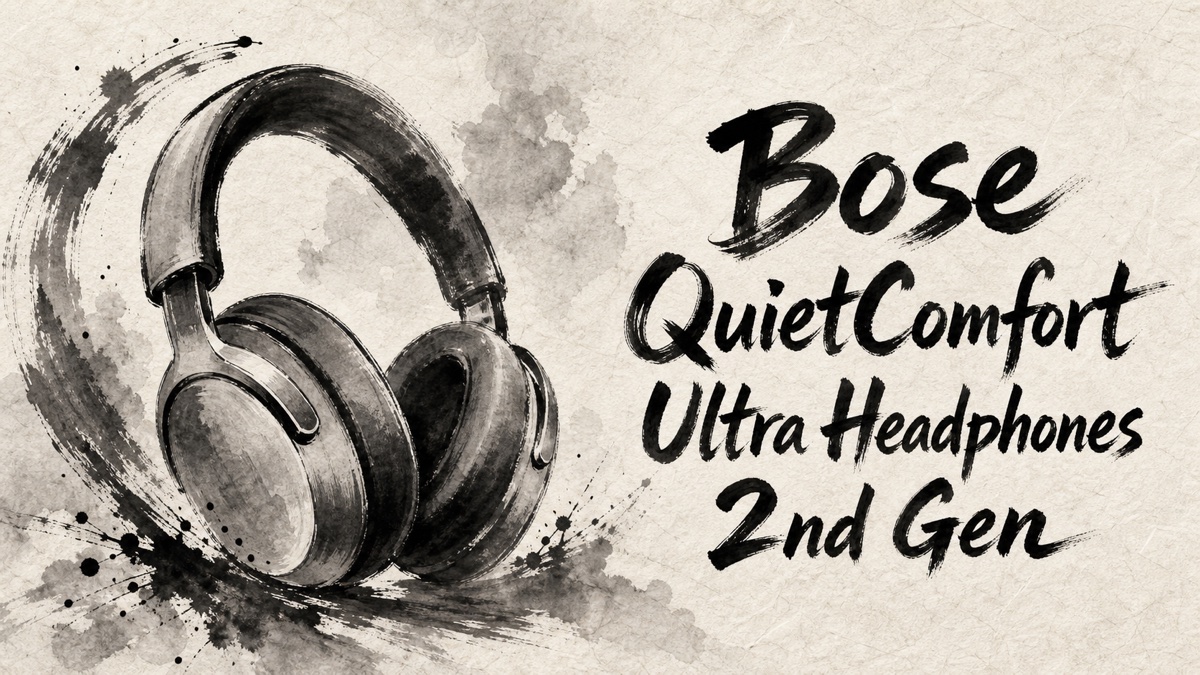
You may be considering the Bose QuietComfort Ultra Headphones 2nd Gen because you want premium over-ear headphones with strong noise cancelling, a rich sound signature, and enough comfort for commuting, work, travel, or long listening sessions.
At the same time, this is not a cheap everyday accessory. Japanese user feedback suggests several points worth checking before buying: whether you like Bose’s warm and immersive sound, how much you value Cinema Mode and USB-C audio, whether the controls and connectivity fit your routine, and whether the price feels justified.
Rather than a hands-on lab test, this article focuses on patterns in Japanese user feedback: where this model is praised, where it divides opinion, and what kind of buyer is most likely to enjoy it.
Amazon.com
Bose QuietComfort Ultra Headphones 2nd Gen
Check current availability on Amazon.com
As an Amazon Associate I earn from qualifying purchases.
What’s Bose QuietComfort Ultra Headphones 2nd Gen
Bose QuietComfort Ultra Headphones 2nd Gen is Bose’s premium wireless noise cancelling over-ear headphone. It is aimed at listeners who want strong active noise cancelling, immersive audio features, app-based sound adjustment, and a comfortable full-size design for everyday use.
If you are also comparing Sony’s current flagship, you may want to read our Sony WH-1000XM6 review summary.
Instead of focusing on every specification, this article looks at the practical question: how do Japanese users seem to evaluate this model as a daily headphone for music, commuting, video, work, and travel?
The main review themes are noise cancelling, Bose-style sound, immersive listening, USB-C audio, comfort, app control, and price. The model makes the most sense when those daily-use benefits matter together, not when a buyer only needs occasional noise reduction.
Positive Reviews
The praise is strongest among users who want a premium Bose-style ANC headphone for daily listening.
- Strong noise cancelling. Users repeatedly treat ANC as one of the most important reasons to choose this model.
- Good sense of quiet for daily use. The headphones seem well suited to commuting, office work, and situations where outside sound becomes tiring.
- Enjoyable Bose-style sound. Japanese impressions often praise the full, warm, and immersive presentation.
- Strong bass presence. Several impressions point to low-end impact and fullness as part of the appeal.
- Sound feels engaging rather than cold. The product seems especially attractive to listeners who want music to feel fun and spacious.
- Cinema Mode adds entertainment value. Users who watch movies or video content may get more value from the immersive modes.
- USB-C audio is a welcome improvement. This gives the 2nd Gen model a practical advantage for some buyers.
- App EQ helps personalize the sound. Users can adjust the presentation instead of accepting one fixed sound profile.
- Comfort is generally well received. Many impressions describe the headphones as easy to wear for longer sessions.
- Good for people comparing Bose and Sony. Several users naturally compare this model with Sony’s premium headphones.
- Better sense of maturity than the first generation. Some impressions suggest the 2nd Gen model feels more refined rather than completely different.
- Balanced enough for different content. Music, video, travel, and daily work are all plausible use cases.
- Useful automatic-style controls. Daily gestures and power behavior can make the headphones feel easier to live with.
- Strong fit for premium ANC buyers. The product makes most sense for people who use noise cancelling often.
- Good match for listeners who like immersive audio. The soundstage and presentation are part of the identity of this model.
- High overall satisfaction in visible Japanese feedback. Aggregate scores and review tone are generally positive.
- Premium feature set feels complete. ANC, immersive sound, USB-C audio, comfort, EQ, and app features work together.
- Works well for long listening when the fit suits the user. Comfort is a practical strength, not only a specification point.
- Better for entertainment than pure analysis. This can be a positive if you want easy, enjoyable listening.
- Clear alternative to Sony’s flagship. The Bose model has a distinct enough character to be worth comparing directly.
Negative Reviews
The concerns mostly come from price expectations, sound preference, controls, and whether the premium features are actually needed.
- Price expectations are high. At this level, small annoyances become more important.
- Controls can divide opinion. Some feedback suggests that daily operation is not equally intuitive for everyone.
- Connectivity may not be perfect for every user. Connection behavior appears as a more mixed theme than sound or ANC.
- Sound preference matters a lot. The Bose signature is engaging, but not every listener wants a warm or thick presentation.
- Not ideal for people who prioritize analytical detail. Listeners who value sharp resolution above all else may prefer another headphone.
- Sound leakage deserves attention. Some users may need to keep volume moderate in quiet spaces.
- App tuning may be necessary for best results. EQ is useful, but buyers who dislike apps may see this as extra work.
- Immersive modes are not essential for everyone. Cinema Mode and spatial effects add value only if you actually use them.
- Headphones can feel less convenient than earbuds. People moving from AirPods-style earbuds may need time to adjust.
- Strong ANC alone may not justify the price for casual users. The value is clearer if you use it often.
- Bose vs Sony is a taste decision. The better choice may depend more on sound preference and comfort than on one universal winner.
- Premium materials raise expectations. Buyers may judge build, controls, and comfort more strictly because of the category.
- Some users may prefer a cooler sound. The Bose presentation is not aimed at every audiophile preference.
- USB-C audio is useful, but not everyone needs it. It should not be treated as the main reason to buy unless it fits your setup.
- Long-session comfort still depends on the user. Positive comfort feedback does not guarantee a perfect fit for every head shape.
- First-generation owners should compare carefully. The upgrade may feel like refinement rather than a dramatic reset.
- Price-sensitive buyers should be cautious. The product is strongest when its premium features are used regularly.
- Feature richness can add complexity. More modes and settings may be welcome, but they also require some setup.
- Quiet rooms can reveal sound leakage or control annoyances. Heavy daily users are more likely to notice small issues.
- It is not a universal recommendation. It is a strong premium headphone, but not the right answer for every listener.
Product Review Summary
Design
Design matters because this is a full-size headphone meant for repeated daily use.
Pros
- Premium over-ear design suits commuting, work, travel, and home listening.
- The overall package feels mature and complete.
- Daily-use controls and carrying practicality support regular use.
Cons
- Premium pricing makes small build or control complaints more noticeable.
- People who mainly use earbuds may find full-size headphones less convenient.
The design works best for users who actually want a full-size daily headphone rather than a compact earbud replacement.
Sound Quality
Sound quality is closely tied to whether the listener likes Bose’s warm, immersive tuning.
Pros
- Warm, full, and immersive sound is one of the clearest attractions.
- Bass presence and entertainment value are strong.
- App EQ gives users room to adjust the sound.
Cons
- Listeners who want a sharper analytical sound may prefer another model.
- The Bose sound signature is a matter of taste.
The 2nd Gen model appears best for listeners who want rich, enjoyable sound rather than a strictly neutral studio-style presentation.
Noise Cancelling & Immersive Audio
Noise control is one of the clearest reasons to consider this headphone.
Pros
- ANC is one of the strongest reasons to consider this model.
- It is well suited to commuting, office work, travel, and focused listening.
- Cinema Mode and immersive audio can add value for video and movie use.
Cons
- Immersive modes may not matter to users who only listen to music.
- Strong ANC is most valuable if you use it often.
Noise cancelling is the safest purchase argument for this model, while immersive audio is a more personal bonus.
Fit & Comfort
Comfort is a practical purchase reason for a full-size ANC headphone.
Pros
- Japanese impressions are generally positive about comfort.
- The headphones seem suitable for longer listening when the fit matches the user.
Cons
- Full-size headphones may feel less convenient for users coming from earbuds.
- Comfort still depends on head shape, glasses, hair, and listening duration.
Comfort looks like a strength, but buyers should still try the headphones if possible.
Usability & Controls
Daily usability depends on controls, app setup, USB-C audio, and connection behavior.
Pros
- USB-C audio support adds flexibility.
- Daily controls and automatic-style behavior can make the headphones easier to use.
- App settings and EQ help users personalize the experience.
Cons
- Controls and connectivity draw more mixed reactions than ANC or sound.
- Buyers who dislike app-based setup may not enjoy the full feature set.
The product is most appealing to users who are comfortable with modern headphone apps and settings.
Value
Value depends on how often the buyer will use the premium ANC and entertainment-focused features.
Pros
- Strong package for heavy ANC users.
- Good fit for people who want one premium headphone for music, work, travel, and video.
- Clear alternative to Sony’s flagship headphones.
Cons
- Casual users may not use enough of the feature set to justify the price.
- First-generation owners should check whether the refinements matter enough.
The value is strongest when you use ANC, comfort, app tuning, and immersive features regularly.
Amazon.com
Bose QuietComfort Ultra Headphones 2nd Gen
Check current availability on Amazon.com
As an Amazon Associate I earn from qualifying purchases.
Summary
Bose QuietComfort Ultra Headphones 2nd Gen suits listeners who want strong noise cancelling, a warm and immersive sound, comfortable full-size headphones, and a premium feature set that works across music, work, travel, and video.
It is recommended for:
- Listeners who use noise cancelling often.
- People who enjoy rich, warm, Bose-style sound.
- Users who watch movies or video with headphones.
- Buyers comparing Bose directly with Sony’s premium headphones.
- People who want app EQ, USB-C audio, and a complete daily-use feature set.
It may not be the best choice for:
- Buyers who want the most analytical or sharply detailed sound.
- Users who dislike app-based setup and EQ.
- People who mainly use earbuds and do not want full-size headphones.
- Price-sensitive buyers who only need occasional noise cancelling.
Overall, Bose QuietComfort Ultra Headphones 2nd Gen looks like a strong premium ANC headphone with a clear personality. Its strengths are noise cancelling, comfort, immersive sound, and daily versatility. Its cautions are just as practical: price, sound preference, controls, connectivity, and whether you actually need the full feature set.

Comments