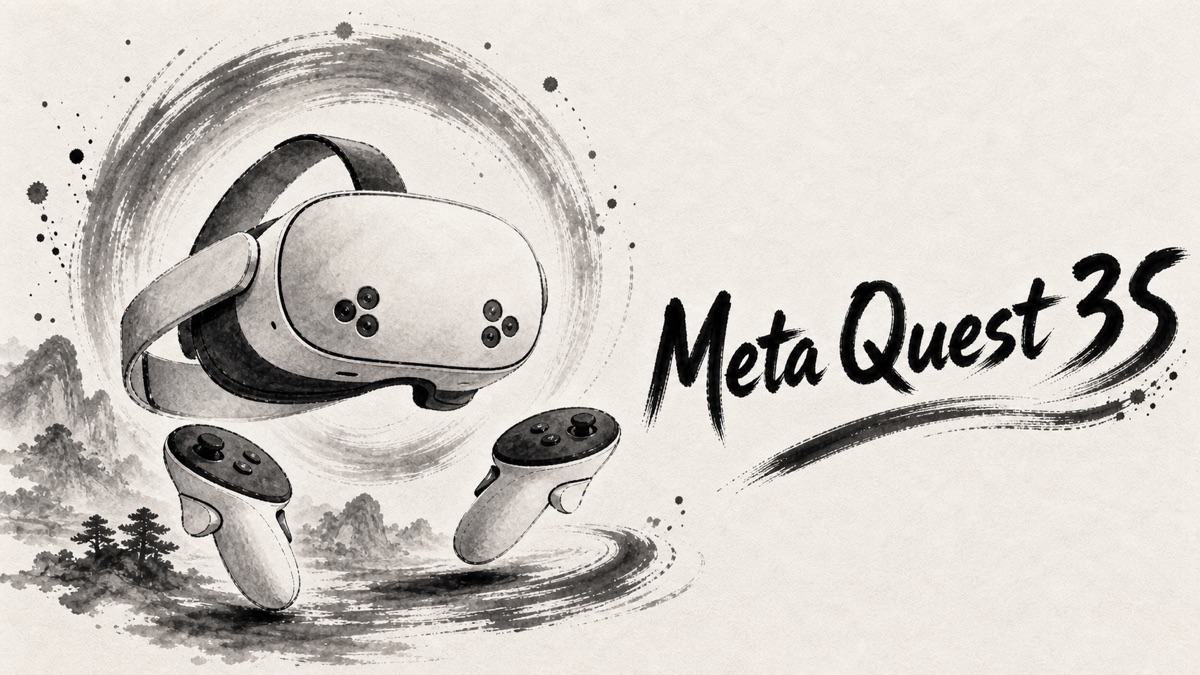
You may be considering the Meta Quest 3S because you want to try VR or mixed reality without jumping straight to the more expensive Quest 3.
Japanese user feedback suggests that the Quest 3S is being judged mostly as an entry point: a headset for first-time VR users, families, fitness games, video watching, and people who want a standalone experience without building a PC-based setup first.
At the same time, the same feedback also makes the trade-offs clear. Comfort, battery life, Fresnel lenses, VR sickness, and the comparison with Quest 3 all come up repeatedly.
Amazon.com
Meta Quest 3S
Check current availability on Amazon.com
As an Amazon Associate I earn from qualifying purchases.
What’s Meta Quest 3S
Meta Quest 3S is a standalone VR/MR headset from Meta. It is positioned as a more accessible entry into the Quest ecosystem for games, fitness, video, family use, and mixed-reality experiences.
Japanese feedback often treats it less as a pure specification product and more as a first serious VR device. The strongest reactions come from people who are surprised by standalone immersion and mixed-reality convenience at a lower entry point than Quest 3.
The trade-offs are also central to the buying decision: comfort, battery life, lens clarity, VR sickness, room space, and whether the buyer should compare it with Quest 3 before choosing.
Positive Reviews
Positive feedback usually comes from beginners and casual users who value an approachable standalone VR/MR experience.
- Strong value for a serious VR headset. Many users see it as one of the easiest ways to enter modern VR without overspending.
- Good fit for first-time VR users. Several impressions describe it as a satisfying first headset or a strong VR debut product.
- Immersion is a major strength. Users mention games, video, sports content, and virtual experiences as feeling more impressive than expected.
- Standalone use is convenient. The ability to play and watch content without a PC makes the headset feel approachable.
- Setup and controls are generally seen as manageable. Some users say the setup was easier than expected and the controllers felt intuitive.
- Color passthrough is appreciated. Japanese feedback often treats it as a practical and enjoyable upgrade from older monochrome or lower-quality passthrough experiences.
- Performance is viewed positively for the price. Some users compare it favorably with older Quest models and feel it is fast enough for common VR uses.
- It works well for casual and family use. Beat Saber, fitness, gifts, and family play appear repeatedly in the checked feedback.
- It can be enough for video and media. Several users value watching videos, browsing, and entertainment apps as part of the headset’s appeal.
- Satisfaction is broadly positive. Across the checked Japanese feedback, the overall tone is favorable, especially when users judge it as an entry-level VR/MR device.
Negative Reviews
Critical feedback focuses on the physical realities of using a headset: comfort, battery life, lenses, space, sickness, and accessory planning.
- Comfort is the most common practical concern. The standard strap, front-heavy balance, face pressure, and fatigue appear repeatedly.
- Many users consider an upgraded strap important. Battery straps or third-party head straps are often mentioned for longer sessions.
- Battery life is limited. Users commonly frame it as acceptable for the price, but not ideal for long play sessions.
- Fresnel lenses are a key compromise. Sweet spot, glare, ring reflections, and clarity outside the center are common points of comparison with Quest 3.
- Field of view and image clarity may not satisfy everyone. Some users are happy with the image, while others notice limitations or want the better optics of Quest 3.
- VR sickness is a real issue for some users. Some people adapt over time, but others find that they or family members cannot use VR comfortably.
- Passthrough has limits. It is useful, but small text, PC screens, and smartphone screens can still be hard to read.
- It needs physical space. Users should not underestimate room layout, walls, and safe movement space.
- Content fit matters. Some users love rhythm games, fitness, and video, while others find that VR games do not become a daily habit.
- Quest 3 remains the better choice for some buyers. If lens clarity, comfort, and overall image quality matter most, several users suggest considering the higher-end model.
Product Review Summary
Value
Value is the main reason many Japanese users treat the Quest 3S as a realistic first VR headset.
Pros
- Strong value is one of the clearest Japanese review themes.
- It offers a serious VR/MR experience at a more approachable level than Quest 3.
- Beginners and casual users are more likely to see the trade-offs as acceptable.
Cons
- It is not cheap enough to buy casually without knowing whether VR suits you.
- Buyers who already know they care about lenses and comfort may feel Quest 3 is worth the extra cost.
The Quest 3S appears strongest when judged as a first modern VR headset, not as the best possible Quest experience.
VR / MR Experience
The VR/MR experience is where the headset can feel much bigger than its entry-level positioning.
Pros
- Users repeatedly mention strong immersion.
- Games, video, fitness, and entertainment apps are common positive use cases.
- Standalone use makes it feel easy to start without a separate gaming PC.
- Color passthrough helps the headset feel more practical and less isolated than older VR devices.
Cons
- Passthrough is not sharp enough for every real-world task.
- Some users still find fine text or screens difficult to view.
- The experience depends heavily on having content you actually want to use regularly.
For people who are curious about VR, the Quest 3S seems to deliver the “wow” moment Japanese users expected. The question is whether that moment becomes a habit.
Comfort & Fit
Comfort is one of the most important practical limits on how much the Quest 3S gets used.
Pros
- Some users find the headset acceptable for short and medium sessions.
- Fit can improve significantly with a better strap.
- Families and casual users still report enjoying the headset despite comfort limits.
Cons
- Front-heavy balance and face pressure are common complaints.
- The standard strap is often treated as a weak point.
- Long sessions can lead to fatigue, headaches, or discomfort.
Comfort is probably the biggest practical reason to budget for accessories. The headset may be affordable, but many users do not treat the stock fit as the final setup.
Image Quality / Lenses
Image quality and lens expectations are where Quest 3S buyers most often compare upward to Quest 3.
Pros
- Many beginners find the image quality good enough or better than expected.
- Users coming from older devices often see clear improvement.
- The headset is capable enough for common games, video, and casual VR use.
Cons
- Fresnel lenses are the main optical compromise.
- Sweet spot, glare, and edge clarity can bother users who are sensitive to image quality.
- Quest 3’s pancake lenses are repeatedly treated as the better option for clarity.
The image quality story is mixed: impressive for beginners and value-focused buyers, but less convincing for people who already know they are sensitive to VR optics.
Battery & Accessories
Battery and accessory planning are part of the real ownership cost, especially for longer sessions.
Pros
- Battery life is often seen as acceptable for shorter sessions.
- Battery straps and third-party accessories can improve both runtime and balance.
- The accessory ecosystem gives users several ways to tune comfort.
Cons
- Longer sessions quickly expose the battery limit.
- Buying a better strap can make the total cost feel less entry-level.
- Accessories may be close to essential for users who plan to play often.
The Quest 3S may look like a simple headset purchase, but Japanese feedback suggests that comfort and battery accessories should be part of the buying plan.
Beginner Fit
Beginner fit depends on whether VR becomes a real habit after the initial surprise wears off.
Pros
- It is well suited to people trying VR for the first time.
- It works well for Beat Saber, fitness, video, and family entertainment.
- Users who value convenience over maximum image quality are likely to be satisfied.
Cons
- VR sickness can make the headset hard to use, even if the product itself is good.
- People who do not find enough VR content they enjoy may stop using it after the novelty fades.
- Buyers who already know they want the best lenses should compare Quest 3 carefully.
The safest way to think about the Quest 3S is as a strong first step into VR, with real trade-offs that become more important as usage time increases.
Amazon.com
Meta Quest 3S
Check current availability on Amazon.com
As an Amazon Associate I earn from qualifying purchases.
Summary
Meta Quest 3S suits users who want to try modern VR or mixed reality with a standalone headset, strong value, color passthrough, and access to popular games and media apps.
It is recommended for:
- First-time VR users who want an approachable entry point.
- Buyers who care about value more than having the best lenses.
- People interested in Beat Saber, fitness, video, and casual VR entertainment.
- Families or gift buyers looking for a shared entertainment device.
- Quest 2 users who want a more modern mixed-reality experience without going straight to Quest 3.
It may not be the best choice for:
- Buyers who are very sensitive to headset weight or face pressure.
- Users who expect long sessions without buying accessories.
- People who are prone to VR sickness and cannot try VR beforehand.
- Buyers who care most about lens clarity, edge sharpness, and comfort.
- Anyone who already knows they want the higher-end Quest 3 experience.
Overall, Meta Quest 3S looks well received in Japanese user feedback, especially as a first VR/MR headset. Its appeal is clear: strong value, easy standalone use, good immersion, and enough performance for common VR uses. Its cautions are also clear: comfort, battery life, Fresnel lenses, VR sickness, and the possibility that Quest 3 may be the better long-term choice for more demanding users.

Comments