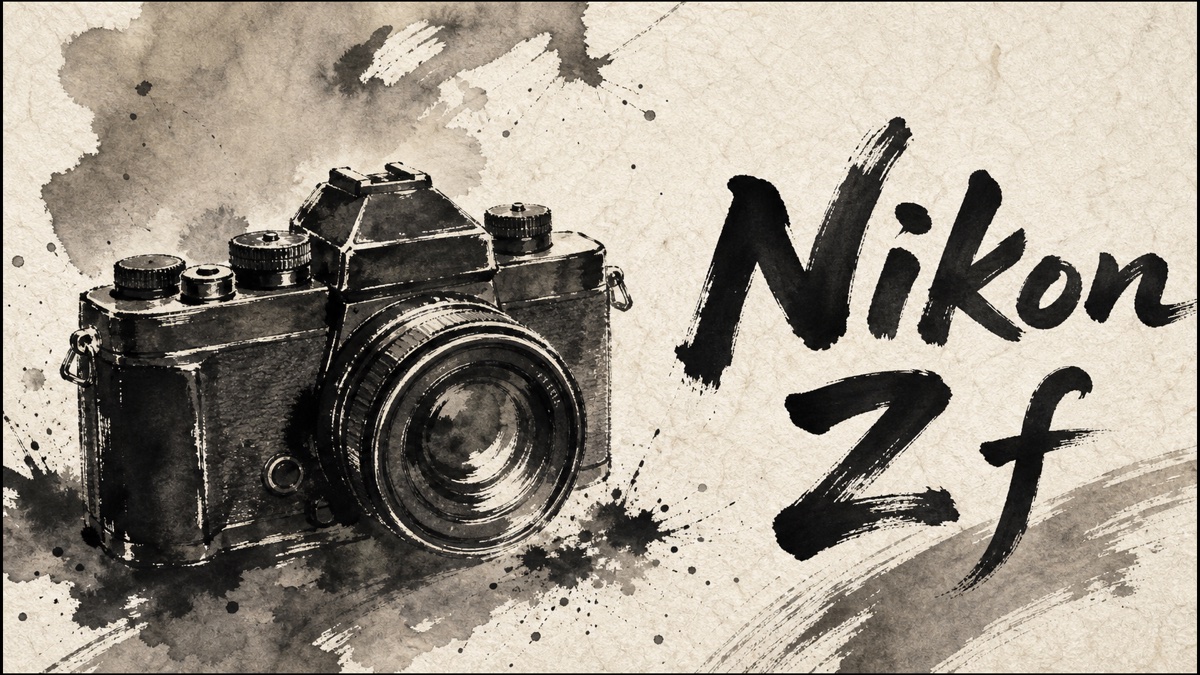
Nikon Z f is not only a full-frame mirrorless camera with retro styling. For many users, the styling is part of the reason the camera works. The physical dials, black or silver body, shutter feel, and classic silhouette make the camera feel closer to a deliberate photographic tool than a purely modern spec sheet.
Japanese user feedback shows a camera that earns affection quickly, but not because it is perfect. Users praise the design, image quality, autofocus, monochrome and color workflow, and the feeling of wanting to carry it. They also point out that the grip is shallow, the body is not especially light, menus and buttons can feel busy, and larger lenses change the whole balance.
The safest way to understand the Z f is as a full-frame camera for people who enjoy the act of shooting. If the reader wants maximum ergonomic efficiency, a more conventional body may feel easier. If the reader wants a camera that makes photography feel more intentional, the Z f has a much clearer appeal.
Amazon.com
Nikon Z f
Check current availability on Amazon.com
As an Amazon Associate I earn from qualifying purchases.
What’s Nikon Z f
Nikon Z f is a full-frame mirrorless camera in Nikon’s Z system. It uses the Z mount and combines a classic film-camera-inspired body with modern mirrorless performance.
The appeal is not only technical. Existing review evidence repeatedly connects the Z f with heritage design, physical dials, full-frame rendering, autofocus, stabilization, and monochrome or color workflow. Many users seem to enjoy it because the camera changes how shooting feels before and after the shutter is pressed.
The Z f should not be understood as a smaller Z8 or a purely practical travel body. Its identity is more specific: a full-frame camera that asks the owner to accept some handling compromises in exchange for a more tactile, characterful shooting experience.
Positive Reviews
The most positive Japanese feedback tends to come from people who want the camera’s physical personality as much as its image quality.
- The design is a major source of satisfaction. Users describe the body as something they enjoy seeing, holding, and keeping nearby.
- The classic dials make shooting feel more deliberate. For users who like physical exposure controls, this is part of the fun.
- Full-frame image quality is appreciated. Users mention clean-looking files, depth, and a satisfying Nikon image character.
- High-ISO performance is valued. Several impressions connect the Z f with confidence in darker scenes or lower-light shooting.
- Autofocus is stronger than the retro body might suggest. Subject tracking and eye detection are repeatedly treated as modern strengths.
- The camera works well for family, walkaround, and everyday photography when paired with the right lens.
- Compact primes fit the concept especially well. Smaller lenses help the body feel charming rather than awkward.
- Monochrome and color controls make the camera more enjoyable for users who like finished-looking images while shooting.
- Some users see it as a satisfying first full-frame body because it offers both modern performance and emotional appeal.
- It can work as a lighter second body for Nikon users who already own larger cameras.
- Build and finish give many owners confidence. The camera feels less like a fashion object and more like a serious tool with style.
- The Z f encourages users to take it out. That may be its biggest strength: it makes photography feel inviting.
Negative Reviews
Critical feedback usually appears when the camera’s classic body shape meets practical modern use.
- Grip is the most common handling concern. The body can feel less secure than a deeper-grip camera, especially with larger lenses.
- The Z f is not as light as its nostalgic shape may imply. Some users notice the weight immediately.
- Larger zooms and telephoto lenses weaken the concept. The camera is most comfortable when the lens choice stays compact.
- Button placement can feel less efficient than on modern ergonomic bodies.
- Menus and settings may feel complex for users who expected a simpler old-style experience.
- Battery life is acceptable for some users, but heavy shooting days can require more planning.
- Some users still prefer Sony or Canon autofocus behavior for certain moving subjects or side-facing faces.
- The lack of some direct controls, such as a dedicated joystick-style selector, can frustrate users who move focus points often.
- External grips can improve hold, but they add bulk and disturb the clean design that attracted buyers in the first place.
- The Z f is not the most rational choice if the buyer wants one body for maximum speed, comfort, and efficiency.
Product Review Summary
Heritage Design & Shooting Feel
The Z f succeeds when the buyer wants the camera itself to change the rhythm of shooting. Its design is not just decoration; it is part of the experience.
Pros
- The classic look gives the camera a strong identity.
- Physical dials make exposure settings feel more tangible.
- The body can make photography feel more intentional and enjoyable.
Cons
- The same design limits grip depth and modern ergonomic efficiency.
- Users who do not care about retro controls may see less benefit.
- The camera can feel emotionally appealing before it feels practically perfect.
The Z f is best understood as a camera for people who want shooting to feel different, not just faster.
Image Quality & Color Workflow
Japanese feedback suggests that users enjoy the Z f because the files and in-camera looks support the camera’s personality.
Pros
- Full-frame image quality gives users depth and low-light confidence.
- Nikon color and natural-looking rendering are appreciated.
- Monochrome and color controls make shooting feel more creative before editing.
Cons
- Users who mostly edit RAW files later may care less about the in-camera style workflow.
- Some buyers may want higher resolution for cropping-heavy work.
- Image quality alone does not solve grip or operation concerns.
The Z f feels most coherent when the buyer enjoys deciding the look of the photo while holding the camera, not only at a computer later.
Autofocus & Everyday Performance
The Z f looks old-fashioned, but user impressions often treat its autofocus as a real modern strength.
Pros
- Subject tracking and eye detection receive positive comments.
- The camera can handle everyday people, family, and walkaround use confidently.
- Modern AF makes the retro body feel less like a compromise-only product.
Cons
- Some users still prefer competing systems for certain moving subjects.
- AF performance depends on setup, subject, and lens choice.
- Users who need a sports-oriented body may want a more purpose-built camera.
The Z f is not just a nostalgic body. It has enough modern performance to support casual and serious everyday shooting, as long as expectations stay realistic.
Grip, Weight & Lens Balance
Handling is where the Z f divides users most clearly. The camera’s best version appears with compact lenses.
Pros
- Smaller primes make the body feel balanced and enjoyable.
- Some users find the size comfortable as a carryable full-frame camera.
- The body can work well as a second camera when the main system is larger.
Cons
- The shallow grip becomes more noticeable with heavier lenses.
- The body is not especially light for people expecting a small retro camera.
- Add-on grips help, but they change the clean shape and add bulk.
Lens choice is not a minor detail with the Z f. It decides whether the camera feels charming or tiring.
Controls, Menus & Long-Term Fit
The Z f mixes old-style physical controls with modern digital menus. That blend is attractive, but it is not effortless for everyone.
Pros
- Top dials give quick visual confirmation of major settings.
- Users who enjoy deliberate operation may find the control style satisfying.
- The camera has enough modern features to serve as more than a design piece.
Cons
- Some button placement and menu choices feel less direct than on conventional bodies.
- Focus-point movement and fast setting changes may feel slower for some users.
- Buyers who want the cleanest modern control layout may prefer another Nikon body.
The Z f rewards users who enjoy its pace. It is less ideal for people who want every control decision optimized for speed.
Amazon.com
Nikon Z f
Check current availability on Amazon.com
As an Amazon Associate I earn from qualifying purchases.
Summary
Japanese user feedback presents the Nikon Z f as a camera that people often like for reasons beyond specifications. The design, dials, full-frame image quality, autofocus, color workflow, and shooting mood all work together. For the right user, it can make photography feel more personal and more inviting.
The weaknesses are just as important. The grip is limited, the body has real weight, larger lenses can feel awkward, and the control layout is not always the fastest. The Z f is not a universal full-frame recommendation. It is a camera with a point of view.
It is recommended for:
- Photographers who want a full-frame camera with strong physical character.
- Nikon users who want a more enjoyable everyday or second body.
- People who like physical dials and a deliberate shooting rhythm.
- Users who plan to pair the camera with compact primes.
- Buyers who value color, monochrome, and shooting feel as much as pure efficiency.
It may not be the best choice for:
- Users who need a deep grip for heavy lenses.
- Photographers who prioritize the fastest modern control layout.
- People expecting a very light retro-style camera.
- Sports or action shooters who want a more purpose-built body.
- Buyers who do not care about heritage design or tactile operation.
The Nikon Z f is at its best when the buyer wants the camera’s personality, not only its performance. If that personality sounds motivating, the compromises may feel worthwhile. If it sounds like decoration, a more conventional Nikon body will probably make more sense.
Comments