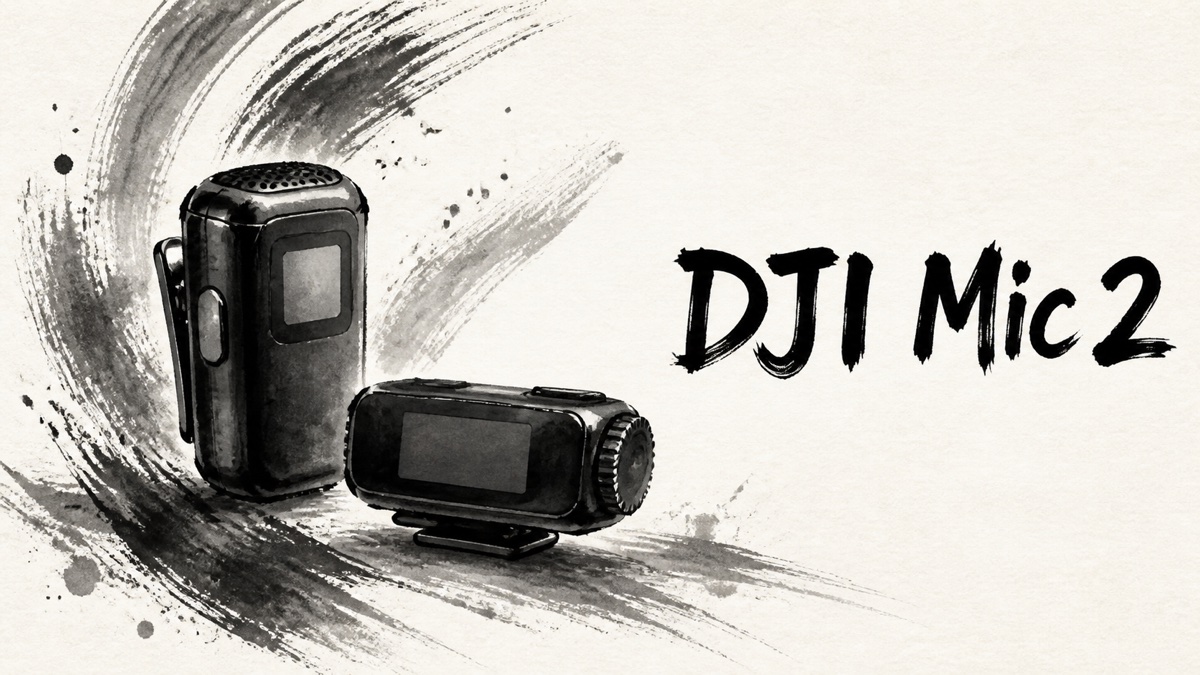
DJI Mic 2 (1 TX + 1 RX) DM1022 is aimed at people who want clean speech without carrying a full recording rig. Japanese owner reports make the appeal clear: the receiver is easy to adjust once its controls are understood, the transmitter can record internally, and the same kit can move between a phone, camera, action camera, or computer.
The trade-offs are practical rather than dramatic. Clothing friction and transmitter placement can change the sound, the first setup takes some learning, and a USB connection does not automatically solve every charging or power need. This review summary separates the repeatable strengths from the conditions that should be checked before buying.
Amazon.com
DJI Mic 2 (1 TX + 1 RX)
Check current availability on Amazon.com
As an Amazon Associate I earn from qualifying purchases.
What’s DJI Mic 2 (1 TX + 1 RX) DM1022
DJI Mic 2 (1 TX + 1 RX) DM1022 is a wireless microphone set with one transmitter and one receiver. The receiver has a 1.1-inch OLED touch display and a physical dial for changing gain and other settings. DJI also lists USB-C and Lightning digital output, plus a 3.5mm TRS connection for cameras, so the set is designed to move between phones, cameras, tablets, and computers.
The transmitter supports internal recording, including 32-bit float recording, and DJI describes up to 14 hours of internal recording. Smart noise cancellation and a supplied windscreen are intended to help in busy or windy locations. The official page also lists a transmission distance of up to 250 m under its stated test conditions; that figure should be read as a specification, not as a promise for every street, room, or body position.
This is the one-transmitter version. It keeps the kit compact and makes sense when one speaker is the normal use case, but two-person interviews or a second camera angle may call for a different configuration. The comments below describe this exact 1TX+1RX product rather than the two-transmitter charging-case variant.
Positive Reviews
The positive pattern is about reducing friction while recording. Owners value features that preserve a usable take when the scene is noisy or the camera setup changes.
- Voices generally come through clearly. Several owners describe clean pickup for speech, including a report that remained clear in a noisy venue from roughly 25 metres. Another user simply liked how much sound the microphone captured. These are individual experiences, not a lab measurement, but they point to a strong fit for interviews, vlogs, and voice input.
- The receiver’s physical control is genuinely useful. A Japanese review specifically preferred turning a dial on the receiver to adjusting everything on a screen. Other owners liked the receiver’s build and on-device controls. Once the layout is familiar, gain changes and quick checks feel more deliberate than tapping through a phone menu.
- Wind protection helps outside. Owners using the kit while cycling or with an action camera report that the windscreen made a noticeable difference. That does not make placement irrelevant, but it gives outdoor speech a better starting point than an exposed microphone capsule.
- Internal recording provides a valuable backup. The transmitter’s internal recording and the 32-bit float workflow are repeatedly mentioned as reasons to feel safer during a live shoot. Included accessories and the ability to keep a local recording also make the kit useful before the final camera or phone file is checked.
- It adapts to more than one kind of camera. Reports mention iPhones, Android or PC-style voice input, Sony cameras, DSLRs, and action cameras. A compact receiver, digital adapters, and an analogue camera connection mean the microphone can follow a creator’s changing setup instead of being tied to a single device.
Negative Reviews
The cautions are easy to miss in a feature list because they appear only when the microphone is worn, configured, or connected in a particular way.
- The first setup is not entirely self-explanatory. One owner called the initial configuration a hurdle, and another found the operation confusing despite liking the sound. The display and dial are helpful after a short learning period, but the kit does not behave like a one-button phone accessory on day one.
- Placement still determines the result. Wind noise can be controlled with the windscreen, while clothing rub or a poorly positioned transmitter can become the dominant sound. A user who expects noise cancellation to fix every physical placement problem may be disappointed.
- USB is not a universal power solution. A PC user found the small transmitter and receiver convenient but noted that a USB wired connection did not power or charge the receiver as expected. Check the charging state before a long session instead of assuming that any connected USB cable is enough.
- A few reports hear processing or variation. Alongside clear-sound praise, one owner perceived a slightly muffled or processed character. Another noted a measurable difference between units while still preferring the convenience. These comments do not establish a failure rate, but they are a reason to test a voice, clothing, and room setup during the return period.
- The one-transmitter package has a defined ceiling. DM1022 is efficient for one speaker, but it is not the natural choice for two people speaking at once. Buyers planning interviews, two-person podcasts, or a spare transmitter should compare the set contents before ordering rather than adding the wrong accessory later.
Product Review Summary
Sound, wind, and placement
The microphone is most convincing when “clear sound” means a usable spoken take in a real place, not a promise that every surrounding noise disappears.
Pros
- Multiple owners report clear voice pickup in rooms, outdoors, and with action cameras
- The windscreen helps reduce wind noise during movement
- The microphone captures a broad range of sound for speech and general video
- Smart noise cancellation can provide a cleaner starting point in busy surroundings
Cons
- Clothing friction and transmitter position can overwhelm the processing benefits
- Some listeners may hear a slightly processed or muffled character
- The small set of Japanese posts cannot prove consistency across every unit
- A long transmission-distance specification does not remove obstacles, interference, or body-position effects
Treat the windscreen and placement check as part of the recording routine. They are not optional finishing touches when the microphone is worn on moving clothing.
Controls and setup
The receiver’s screen and dial are the hardware feature that most changes the daily experience.
Pros
- A physical dial makes gain adjustment easier to understand than screen-only control
- The receiver can show recording level and battery information at a glance
- A compact transmitter and receiver are easy to carry between shoots
- The system becomes quick to operate once the initial menu and pairing steps are learned
Cons
- First-time setup and menu navigation can feel confusing
- A user needs to confirm the correct gain, channel, and recording state before a take
- Small displays are useful for checks but not a substitute for a full audio monitor
- USB connection behavior should be tested before relying on a computer as a power source
This is a good fit for a creator who will spend a few minutes learning the controls. Someone looking for a disposable plug-and-play accessory should leave more time for setup or choose a simpler microphone.
Internal recording and safety
Internal recording is the strongest reason to choose this family over a basic wireless link.
Pros
- Internal recording gives a second copy when the camera or phone track is compromised
- 32-bit float recording can preserve headroom for unpredictable voices and live scenes
- Owners value the included accessories and the ability to record before deciding on a camera
- The workflow suits interviews, vlogs, live content, and future editing
Cons
- A backup file still needs to be checked, copied, and managed after the shoot
- The added recording options make the first configuration more involved
- Battery and storage status remain the user’s responsibility
- Internal recording does not correct a badly placed or clothing-rubbing microphone
The best habit is simple: start a short test recording, listen to it, and confirm both the transmitter file and the camera feed before the real take.
Compatibility and the 1TX+1RX kit
The selected kit is useful because it does not lock a creator into one camera ecosystem.
Pros
- USB-C, Lightning, and 3.5mm camera connections cover phones and conventional cameras
- Reports describe use with iPhone, PC, Sony cameras, DSLRs, and action cameras
- One transmitter and one receiver keep the normal one-speaker kit compact
- Owners who already have a separate transmitter can choose a smaller addition instead of another full set
Cons
- The 1TX+1RX package is not designed for two simultaneous speakers
- Adapters and cables need to be packed with the receiver for each type of shoot
- Existing DJI kits can make set selection confusing if the model number is skipped
- USB charging assumptions can leave a receiver unready when a session starts
Read the package contents first. The compactness is a strength only when one speaker is enough and the required phone or camera adapter is already in the bag.
Amazon.com
DJI Mic 2 (1 TX + 1 RX)
Check current availability on Amazon.com
As an Amazon Associate I earn from qualifying purchases.
Summary
DJI Mic 2 (1 TX + 1 RX) DM1022 is a practical wireless microphone for a solo creator who wants clean speech, a physical receiver control, and an internal recording safety net. Japanese owners repeatedly point to clear pickup, useful wind protection, and the freedom to move from a phone to a camera or PC. The 1TX+1RX configuration is also a sensible way to keep a one-person kit small.
The important caveats are physical and procedural. Clothing rub still matters, the first setup asks for patience, and USB is not a universal charging answer. A small number of reports mention a processed sound or unit-to-unit variation, so a short test during the return period is sensible. Buyers recording two people should also compare the two-transmitter configuration instead of assuming this set will grow into it.
It is recommended for:
- Solo vloggers, interviewers, and live creators who need a compact wireless mic
- People moving between iPhone, Android, PC, action camera, and conventional camera setups
- Users who value internal recording and 32-bit float as protection against a bad camera track
- Creators willing to learn the receiver’s dial, display, gain, and pairing workflow
- Buyers who want one transmitter and one receiver rather than a larger two-person kit
It may not be the best choice for:
- Two-person interviews that need two microphones from the first shoot
- Users who will not check placement, wind protection, or a short test recording
- Anyone expecting noise cancellation to remove clothing friction or every room sound
- Buyers who assume any USB cable will charge or power the receiver
- People who want a completely screen-free, one-button microphone accessory
DJI Mic 2 is at its best when it is treated as a small recording system: clip it carefully, check the levels, keep the internal file, and choose the kit around the number of speakers you actually record.
Comments